
Impacted Wisdom Teeth
What Are Wisdom Teeth?
Third molars are commonly referred to as wisdom teeth. They are usually the last teeth to develop and are located in the back of your mouth, behind your second molars. Their development is usually completed between the middle teenage years and early twenties, a time traditionally associated with the onset of maturity and the attainment of wisdom.

Wisdom Teeth Presentation
To provide you with a better understanding of wisdom teeth, we have provided the following multimedia presentation. Many common questions pertaining to wisdom teeth are discussed.
What Is An Impacted Tooth?
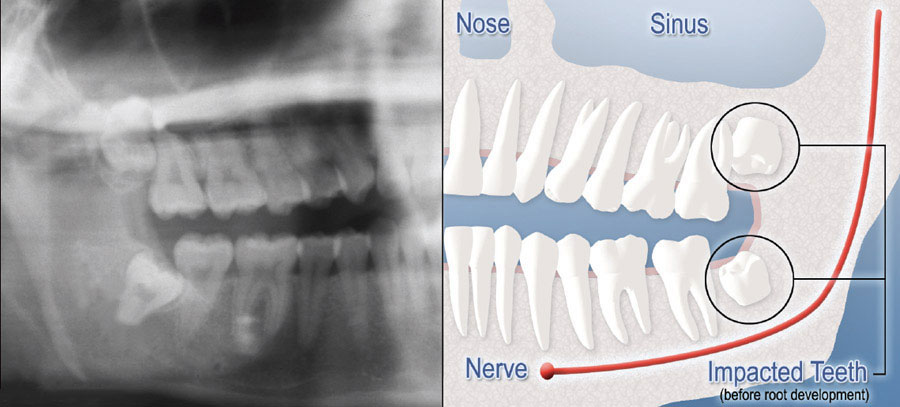
Although most people develop and grow 32 permanent adult teeth, many times their jaws are too small to accommodate the four wisdom teeth. When inadequate space prevents the teeth from erupting they are called impacted. This indicates their inability to erupt into the proper position for chewing and cleaning.
Are You Seeking Relief From Wisdom Tooth Pain or Irritation?
Don’t suffer any longer! Dr. Kelly can gently extract impacted wisdom teeth to relieve pain and prevent future complications.
We will need to see you for a consultation to determine if you will benefit from wisdom tooth removal. A special x-ray of your mouth and jaws (panorex) will be taken to determine if your wisdom teeth are impacted, if there is room for them to erupt, and how difficult it will be to have them removed.
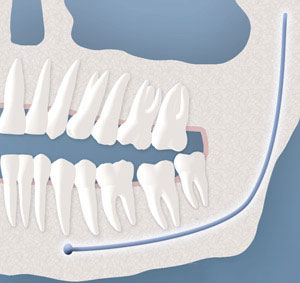
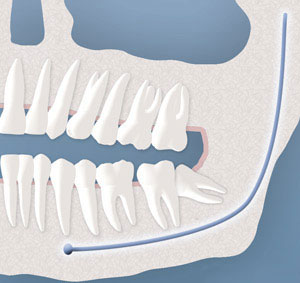
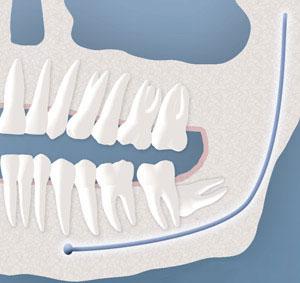
- Soft Tissue Impaction: There is not enough room to allow the gum tissue to retract for adequate cleaning of the tooth.
- Partial Bony Impaction: There is enough space to allow the wisdom tooth to partially erupt. However, the tooth cannot function properly in the chewing process, and creates cleaning problems, among others.
- Complete Bony Impaction: There is NO space for the tooth to erupt. It remains embedded in the jaw bone or if even partially visible requires complex surgical techniques for removal.The impacted wisdom tooth may also be in an unusual position and difficult to remove. This situation can also arise when the shape or size of the jaw bone and other facial structures make removal of this tooth significantly more complex.
Wisdom Teeth FAQ (Frequently Asked Questions)
What Should I Eat After Wisdom Teeth Removal?
After wisdom teeth removal, start with clear liquids such as broth and gelatin while your mouth begins to heal. As you feel more comfortable, you can slowly add soft foods such as mashed potatoes, scrambled eggs, and well-cooked pasta.
How Long After Wisdom Teeth Removal Can I Eat?
Most patients can begin sipping clear liquids later on the day of surgery, once they are home and resting comfortably. Once tolerating clear liquids, you can move to soft foods and then to more substantial meals as your comfort allows. Your post-operative instructions will guide you through each stage so you know what to expect as you heal. Do your best to stay adequately hydrated and get appropriate nutrition as this will aid in healing.
When Do Wisdom Teeth Come In?
Wisdom teeth are the third set of molars and typically begin to develop during the early teen years. Although they may not fully emerge until the late teens or early twenties, wisdom teeth can begin causing problems in your early to mid-teen years. Many people simply do not have enough room in their jaws for these teeth to grow into a healthy position. We recommend having wisdom teeth evaluated in the early teen years to assess their development, available space, and potential for future problems. Early evaluation allows us to determine the ideal timing for removal, when necessary, often making treatment easier and recovery more predictable.
How Long Does Wisdom Teeth Removal Take?
Wisdom teeth removal usually takes about 30 to 60 minutes, depending on how many teeth are being removed and how they are positioned. Plan to be in our office for about 90 minutes total, which allows time for preparation and initial recovery. Because most patients choose sedation, please arrange for a parent or responsible adult to drive you home and stay with you for the rest of the day.
What Are Impacted Wisdom Teeth?
Impacted wisdom teeth are third molars that do not have enough room to come in fully, or that grow in at an angle beneath the gums. Over time, impacted wisdom teeth can lead to gum irritation, infection, cysts, crowding, or damage to the neighboring second molars. During a consultation at our Gilbert office, we use an exam and X-rays to see how your wisdom teeth are developing and recommend the approach that best fits your needs.
Paul Kelly Maxillofacial
Our Latest Patient Testimonial
The staff at PKM is very nice, knowledgeable and professional from the minute you hit the front door until you check out after your consultation.
- Callie V
Our Latest Patient Testimonial
EXCEPTIONAL!! I was really hesitant to have my 14 year old daughters wisdom teeth removed as I know their are risks. Although I have had many procedures done my children have not. I had other offices do quotes. I do have insurance. I have to say from the start of the consultation to the finish. I was treated exceptional!! The staff is kind and caring and I felt at ease every step of the way. Dr. Kelly was more than exceptional in his explanation and making me feel like I understood everything. It was such a great experience my daughter said on the way home "she wished she could do it again. "To me that was priceless!! She was most worried about the IV being put in her arm and she said she didn't feel a thing!! She said Dr. Kelly was the best!! They called me to check up on us when we got home. All of this and it was less than others. Please don't hesitate to put your trust in Dr. Kelly and his staff as they are EXCEPTIONAL!!
- Arabella D
Our Latest Patient Testimonial
All the staff are so welcoming and nice. Dr. Kelly is so comfortable to be around. He’s a people person for sure!
- Elle A